
Blog categories

Weekly newsletter
No spam. Just the latest releases and tips, interesting articles, and exclusive interviews in your inbox every week.
Latest from the blog
GitHub Internal Repositories Breached: Source Code and Internal Data Allegedly Exfiltrated in 2026 Supply Chain Attack
Posted on: 20 May 2026 | Author: Foresiet
Introduction
In a significant security incident unfolding on May 20, 2026, GitHub confirmed unauthorized access to its internal repositories. The breach involved the exfiltration of sensitive internal source code and organizational data, reportedly totaling around 3,800 to 4,000 private repositories. A threat actor surfaced on underground forums advertising the stolen materials for sale, complete with directory listings of compressed archives and sample verification offers. This event highlights the persistent risks to even the most critical infrastructure platforms in an era of sophisticated supply chain and endpoint compromises.

Figure 1: Official GitHub announcement investigating unauthorized access to internal repositories, posted on May 20, 2026.
The incident originated from a compromised employee device infected via a malicious Visual Studio Code extension. This foothold enabled access to and exfiltration of GitHub’s internal repositories. No customer data outside GitHub’s internal systems appears impacted, but the stolen materials include platform source code and internal tools. A threat actor known for supply chain operations listed the data for sale starting at $50,000–$95,000, threatening free public release if no buyer emerges. GitHub has contained the breach, rotated secrets, and continues monitoring. The event underscores vulnerabilities in developer tools and endpoint security within high-value organizations.
Why VS Code Extensions Pose Serious Risks
VS Code extensions execute with extensive privileges directly in the developer environment, granting them proximity to highly sensitive assets. They can access open source code files, read local project directories, harvest authentication tokens stored in settings or keychains, monitor and interact with integrated terminal sessions, and extract cloud credentials (AWS, Azure, GCP) along with CI/CD pipeline secrets and configuration files. This deep access allows malicious extensions to silently exfiltrate credentials, inject backdoors into codebases, or pivot into internal repositories — turning a simple plugin into a powerful initial access vector for supply chain attacks.
What Happened: Timeline and Attack Details
The breach was detected following suspicious activity linked to an employee’s device. Investigation revealed the compromise occurred through a poisoned VS Code extension, which provided the initial access vector. From there, the attacker navigated internal systems to exfiltrate data from thousands of private repositories containing GitHub’s own platform code, internal tools, and organizational resources.
Shortly after, a forum post appeared advertising “Internal Github Source Code” with claims of approximately 4,000 private repositories. The listing emphasized authenticity, offering samples to potential buyers and displaying a detailed directory of .tar.gz archive files from the exfiltrated data.
GitHub publicly acknowledged the unauthorized access on May 20, 2026, stating their assessment aligned with the claimed volume of affected repositories. The company isolated the compromised device, initiated secret rotations, and Github confirmed the breach was limited to internal repositories.
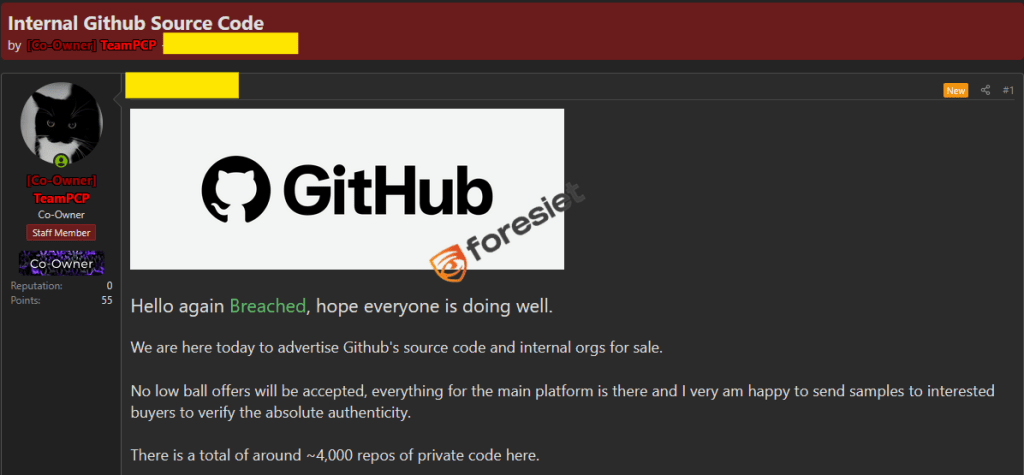
Figure 2: Forum advertisement claiming sale of GitHub internal source code and private repositories by the actor.
Technical Breakdown of the Compromise
The attack leveraged endpoint compromise on a developer workstation. A malicious VS Code extension served as the delivery mechanism, likely harvesting credentials or providing persistent access. Once inside, the attacker accessed internal GitHub repositories, exfiltrating large volumes of code in compressed archives.
The directory listing revealed numerous .tar.gz files, including references to internal projects, tools, and configurations — evidence of deep access to GitHub’s development environment.
Example of observed archive files from the claimed dump (directory structure style):

This structure suggests systematic archiving of private repositories for exfiltration.
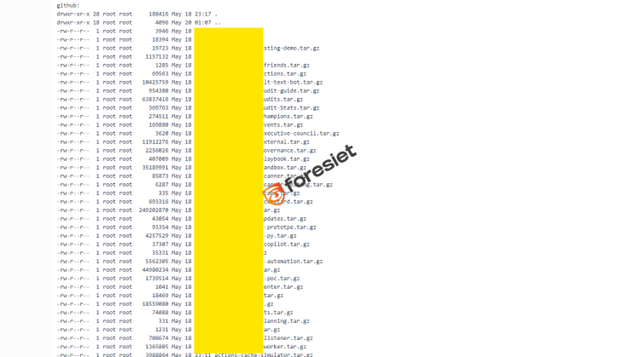
Figure 3: Directory listing showing multiple .tar.gz archives from the claimed GitHub internal data exfiltration.

Figure 4: Actor’s post detailing sale terms, current offer price, and intent to leak if no buyer found.
Actor Profile and Motivations
The actor behind the listing has a history tied to aggressive supply chain campaigns throughout 2026. In this case, the post explicitly states it is not a ransom demand against GitHub, positioning the data as a retirement payday. They invited offers above $50,000 and noted willingness to leak publicly if unsuccessful in finding a buyer.
Potential Impacts
If the data is authentic, exposed internal source code could enable:
- Discovery of undisclosed vulnerabilities in GitHub’s platform
- Supply chain attacks against dependent services
- Targeted phishing or impersonation using internal knowledge
- Reverse engineering of proprietary tools and workflows
Broader risks include accelerated vulnerability research by malicious parties and erosion of trust in major development platforms.
Mitigation and Response Measures
GitHub has taken swift actions:
- Isolated the compromised employee device
- Rotated affected secrets and credentials
- Enhanced monitoring for follow-on activity
- Confirmed no customer repository impact
Organizations using GitHub should:
- Review and rotate any secrets or tokens potentially exposed in internal workflows
- Audit VS Code extensions and enforce strict approval policies
- Monitor for anomalous activity in repositories and CI/CD pipelines
- Apply latest security updates for development tools
Organizations affected by supply chain attacks should also invest in dark web monitoring solutions to identify leaked credentials, exposed source code, and stolen corporate data before threat actors misuse them.
Conclusion
The May 2026 GitHub internal breach represents a stark reminder of how endpoint compromises can cascade into major platform-level incidents. With thousands of internal repositories allegedly exfiltrated and now circulating in underground markets, the incident elevates risks across the software ecosystem. As investigations continue, the focus remains on containment, transparency, and strengthening defenses against supply chain and developer tool threats. Vigilance in endpoint security and secret management has never been more critical.
About us!
Foresiet is the pioneering force in digital security solutions, offering the first integrated Digital Risk Protection SaaS platform. With 24x7x365 dark web monitoring and proactive threat intelligence, Foresiet safeguards against data breaches and intellectual property theft. Our robust suite includes brand protection, takedown services, and supply chain assessment, enhancing your organization’s defense mechanisms. Attack surface management is a key component of our approach, ensuring comprehensive protection across all vulnerable points. Compliance is assured through adherence to ISO27001, NIST, GDPR, PCI, SOX, HIPAA, SAMA, CITC, and Third Party regulations. Additionally, our advanced antiphishing shield provides unparalleled protection against malicious emails. Trust Foresiet to empower your organization to navigate the digital landscape securely and confidently.
Latest
From the blog
The latest industry news, interviews, technologies, and resources.