
Blog categories

Weekly newsletter
No spam. Just the latest releases and tips, interesting articles, and exclusive interviews in your inbox every week.
Latest from the blog
Phone Bombing Attacks 2026: A Complete Guide
Posted on: 30 June 2026 | Author: Foresiet
If your phone has not stopped buzzing for twenty minutes, you may be facing a synchronized disruption tactic called a “bombing” attack. In the 2026 cybersecurity landscape, flooding an endpoint with many requests is not just a nuisance. A weaponized operational strategy.
Whether an SMS bomber script targets a person or bot networks drive up a business’s API bills, the exploit works the same way. Attackers are abusing automated delivery workflows to cause operational paralysis or financial drainage. Mitigating this risk requires moving past generic cloud security tips and understanding how to isolate identity boundaries and application logic.
How the Attack Works: From Interference to Exploitation
To stop a bombing run, we have to look at what the attacker is actually trying to accomplish. In our threat intelligence research, we generally see these attacks split into two distinct methodologies:
SMS Pumping (Toll Fraud): For businesses, this is a financial attack. Automated botnets scour public-facing registration or authentication forms.
Once they locate an unguarded input field, they flood it with requests to premium-rate phone numbers. The threat actors take a share of the carrier routing fees they generate. This leaves the business with a five-figure API bill overnight.
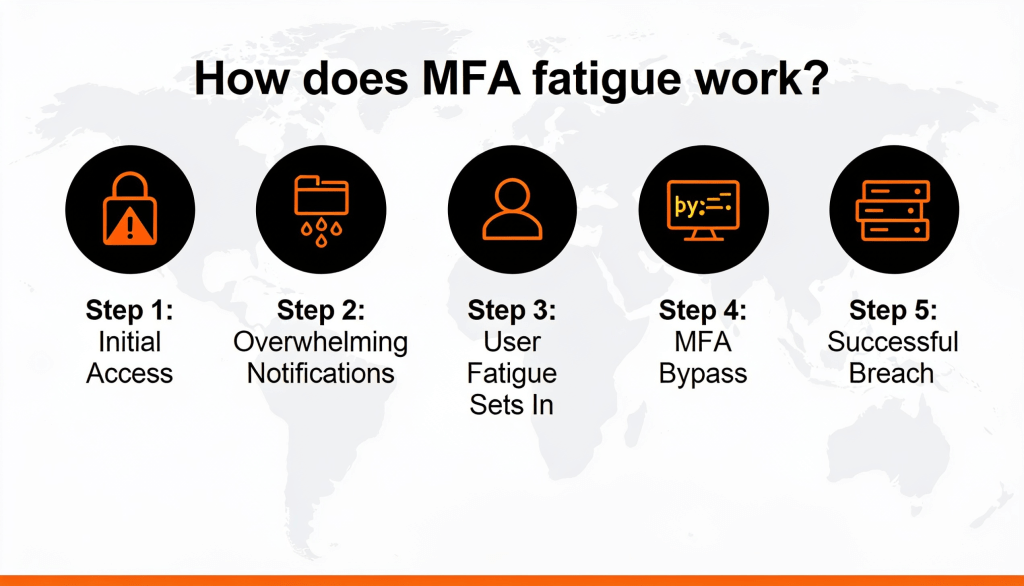
MFA Fatigue (Push Bombing): For individuals and corporate users, this is a psychological assault. If an attacker buys a leaked corporate password on the dark web, they still must pass MFA. Using script automation, they send hundreds of push approval requests to the victim’s device within minutes. They hope the user taps “Approve” just to stop the phone buzzing.
Ways to Prevent Personal Phone Bombing
If an aggressive message bomber campaign targets your personal device, take action.
If you get malicious RTO message alerts, take action.
Your main goal is to stop the script.
Opt-Out Registers: Many script kiddies use open-source tools, gray-market apps (like BOMBITUP), or custom Android APKs. Interestingly, many of these platforms have a built-in “protection” or “stop” database. They designed it to prevent people from using the tools against their creators. Registering your number on their internal opt-out lists can instantly sever the feed.
Silence the Trigger: If the attack continues, immediate containment is necessary. Place your device on strict “Do Not Disturb” (DND) settings, configured to allow calls and messages only from known contacts. This moves the script processing to the background, preventing device thermal throttling and notification exhaustion.
Carrier Intervention: For prolonged, targeted harassment campaigns, contact your telecom provider’s fraud department. They can trace the origin network blocks and implement upstream filters to drop the spam traffic before it hits the local tower.
For Businesses: Closing the API Vulnerabilities
If you are a developer or an infrastructure architect, you might see a bot network steal an API key. Simple firewalls are not enough to stop it. The requests look structured and legitimate, bypassing basic packet filters.
[Public Signup Form] -> [Unprotected API Endpoint] -> [Botnet Script Flooding] -> [Massive Telco Billing]
|
❌ (Must Intercept Here via Dynamic Controls)
To secure your infrastructure, implement a multi-layered defensive framework:
Contextual Rate-Limiting: Implement strict token bucket algorithms at multiple layers. Limit requests by more than just IP address.
Proxies can easily rotate IPs. Also limit requests by phone prefixes and session IDs. Cap OTP generation to 3 requests per phone number per hour. Add an exponential backoff delay after each failed attempt.
Deploy Dynamic Telemetry Protection: Implement low-friction, script-resistant challenges like Cloudflare Turnstile or dynamic CAPTCHAs on every authentication boundary. This break automated headless browser scripts without destroying the legitimate user onboarding experience.
Intelligent Verification Infrastructure: Switch to carrier-integrated identity solutions like Twilio Verify with fraud guards enabled.
These services calculate an active risk score using real-time telco traffic data.
They automatically drop numbers in unallocated ranges or tied to high-risk international carriers. This happens before your application triggers an expensive SMS delivery.
Predictive Risk Monitoring with Foresiet: By embedding Foresiet’s predictive intelligence into your authentication layer, you can continuously analyze external threat landscapes. Foresiet helps your security operations team monitor risk in real time.
It finds compromised corporate credentials on the dark web. It also blocks login attempts before they trigger an MFA push fatigue loop.
The Technical Maturation of the Tooling Ecosystem
What separates legacy spam bombing from modern campaigns is the structural industrialization of the underlying software.
Attackers have aggressively transitioned away from rudimentary, single-threaded terminal scripts toward highly polished, cross-platform desktop applications and browser-based interfaces. The modern tooling framework is defined by several sophisticated capabilities:
Automated Multi-Region API Distribution: Instead of using a few static servers, modern tools use multi-region networks. These networks access vulnerable third-party APIs at the same time in different regions.
Advanced Evasion Infrastructure: Modern engines include built-in proxy rotation and inject randomized User-Agent headers. This evades basic carrier blocklists and traditional email/SMS security filters.
High-Velocity Concurrency: Scripts use fast languages like Go. They support large-scale concurrent runs. This lets attackers send thousands of separate confirmation requests to a target device in seconds.
Why OTPs and Authentication Are the Primary Target
A common misconception is that a spam bomb is designed to completely break a device or an email server. In reality, the flood targets specific areas. The primary objective of modern text and email floods is the deliberate manipulation of Authentication Systems and human psychology.
Objective: Credential Abuse and Takeover.
Mechanism: Flood the device with plain spam texts mixed with real OTPs.
Goal: Hide real MFA alerts in the noise, so users miss or ignore them.
Mechanism: Send many automated voice calls and SMS messages at once.
Goal: Wear down users, so they approve an unauthorized MFA push to clear alerts.
Mechanism: Add an support call lure during the text flood.
Goal: Push victims to call a fake carrier or a spoofed corporate help desk.
Conclusion
Whether you are trying to silence a buzzing smartphone or you are a CISO defending an API gateway, the 2026 lesson is clear. Static perimeters are obsolete. Attackers will continually look for public-facing automated workflows to abuse for profit or disruption.
Defending against modern bombing vectors requires deep structural visibility. Businesses must implement deep verification scoring, strict behavioral rate-limiting, and proactive risk detection architectures. By using strict checks and spotting threats early, we can make this profitable attack too costly for attackers. By stopping vectors before they appear, we can turn a profitable attack into an expensive failure for attackers.
About us!
Foresiet is the pioneering force in digital security solutions, offering the first integrated Digital Risk Protection SaaS platform. With 24x7x365 dark web monitoring and proactive threat intelligence, Foresiet safeguards against data breaches and intellectual property theft. Our robust suite includes brand protection, takedown services, and supply chain assessment, enhancing your organization’s defense mechanisms. Attack surface management is a key component of our approach, ensuring comprehensive protection across all vulnerable points. Compliance is assured through adherence to ISO27001, NIST, GDPR, PCI, SOX, HIPAA, SAMA, CITC, and Third Party regulations. Additionally, our advanced antiphishing shield provides unparalleled protection against malicious emails. Trust Foresiet to empower your organization to navigate the digital landscape securely and confidently.
Latest
From the blog
The latest industry news, interviews, technologies, and resources.